
Healing From Toxic Relationships: A Quick Guide to Reclaiming Your Peace
For a deep dive into this topic, check out:
Healing From Toxic Relationships: Rediscover Your Inner Glow and Peace (Deep Dive).
Have you ever been in a relationship that leaves you drained instead of glowing? Healing from toxic relationships begins with recognizing when connections are dimming your light rather than enhancing it. These dynamics have a way of blurring the lines between love and harm, leaving you questioning what’s real and what truly deserves your energy.
Every year, millions navigate relationships that quietly borrow pieces of our confidence and joy. Whether it’s the ache after words that cut too deep or the confusion of staying in cycles that feel both familiar and suffocating, reclaiming your peace starts with acknowledging what’s happening and remembering you’re never alone in this experience.

Recognizing the Signs of Toxic Relationships
Recognizing toxicity isn’t always obvious. Sometimes the red flags are waving right in front of us, but we’ve gotten so used to them that they just look like part of the landscape. That moment when you realize something’s off but can’t quite name it? That’s your intuition trying to protect you.
Noticing these patterns early empowers you to make informed choices about what relationships deserve your precious energy. Your inner wisdom often recognizes harmful patterns before your conscious mind can articulate them. Trust, learning to listen to that quiet voice is your first real step toward self-advocacy.
Four Warning Signs When Healing From Toxic Relationships:
- Emotional Manipulation: Gaslighting phrases like “You’re being too sensitive” plant quiet seeds of self-doubt. These subtle tactics keep you questioning your reality, making it harder to create distance. Before you know it, you find yourself constantly second-guessing your perceptions or apologizing for having normal emotional responses.
- Constant Criticism: Comments like “You never get anything right” target your deepest insecurities. Remember: healthy feedback focuses on specific actions, never your inherent worth. Over time, this criticism can reshape how you see yourself, making you feel chronically inadequate no matter how hard you try.
- Isolation: Small comments like “Why do you need to see your friends so often?” gradually shrink your circle of support. This creates a space where the toxic person becomes your primary reference point for reality. Pretty soon, you notice increasing difficulty maintaining outside connections…definitely a signal worth your attention.
- The Cycle: Tension builds, an incident occurs, then comes the “I’ll change” period that rekindles hope. This rhythm creates a powerful emotional attachment that’s difficult to break. The wild thing is, most people in these dynamics report feeling addicted to the reconciliation phase, where intense connection follows conflict, creating a powerful biochemical pattern.
Understanding these signs isn’t about judgment…it’s about honoring your intuition with the first small step toward reclaiming your peace. Plus, recognizing these patterns doesn’t mean you’ve failed or chosen poorly. It simply means you’re becoming more aware of dynamics that no longer serve your growth.
Why Healing From Toxic Relationships Matters
Healing isn’t just some optional self-care activity. When you’ve been in a toxic dynamic, healing becomes essential to reclaiming who you actually are beneath those layers of adaptation.
Think about it this way: that person might physically leave your life, but if you don’t intentionally heal, they’re still taking up rent-free space in your head. Honestly, you might find yourself carrying their voice into new situations, second-guessing decisions, or anticipating criticism that isn’t coming.

People who commit to healing from toxic relationships typically notice improvements in their wellbeing within months. This transformation comes through intentional steps like therapy, setting gentle boundaries, and building support. On top of that, the quality of your future relationships directly connects to how thoroughly you process past experiences. When you heal, you interrupt patterns that might otherwise continue across relationships.
And here’s something nobody talks about enough…healing actually feels good. Sure, there are difficult moments of facing painful truths. But still, there’s this incredible lightness that comes when you’re no longer carrying the weight of someone else’s issues. There’s a beautiful moment when you realize you can breathe deeply again, when you catch yourself laughing without overthinking, or when you finally make a decision without hearing their critical voice in your head.
The Science Behind Recovery
Ever wondered why it’s so hard to just “get over” a toxic relationship? There’s fascinating science happening in your brain and body that explains why healing from toxic relationships takes more than just deciding to move on.
Understanding Trauma Responses During Healing
When you’ve been hurt repeatedly, your nervous system stays on high alert. That’s why you might find yourself jumping at small sounds, feeling anxious in new situations, or struggling to relax even when you’re objectively safe.
These reactions aren’t weakness or overreacting…they’re your body being incredibly responsive to keep you safe. Let’s be real, the key is gently showing your system that the danger has passed. This process happens through consistent experiences of safety rather than just intellectually knowing you’re okay.
Research shows that trauma from relationships affects the same neural pathways as physical pain. Just look at the neuroimaging studies: rejection and criticism activate similar brain regions as physical injuries. This helps explain why relationship distress can feel so physically debilitating and why healing requires more than just changing your thoughts.
Breaking the Biochemical Attachment
When someone treats you poorly and then follows it with moments of intense affection, your brain gets flooded with feel-good chemicals during those good moments. After a while, your brain starts craving that rush, even if it means enduring the bad parts to get there.
These trauma bonds develop through contrasting moments of connection and confusion, creating a biochemical rhythm in your body. Intermittent affection triggers feel-good hormones, while uncertainty keeps you focused on recapturing those high moments. Think of it like this…it creates a powerful attachment that’s difficult to break when healing from toxic relationships.
This is why self-care isn’t selfish during healing…it’s essential medicine. Every time you choose something genuinely nourishing for yourself, you’re helping your nervous system recalibrate to a new normal based on care rather than chaos. At the same time, activities that regulate your nervous system…like mindfulness practices, gentle movement, and quality sleep, help rebuild neural pathways associated with safety.

Essential First Steps on Your Healing Journey
Where do you begin when everything feels overwhelming? Healing from toxic relationships unfolds through small, brave choices made one day at a time. Healing isn’t a race but a gentle return to yourself.
- Acknowledge what happened with compassion. Simply allowing yourself to say, “That wasn’t okay,” without immediately jumping to excuses creates the foundation for healing. Fun fact: many people experience anxiety that eases with validation. Writing a letter you never send can help release what feels stuck.
- Find spaces that feel safe. Start with one trusted friend or family member, or even an online community. The key is finding places where your experience won’t be minimized. Research on post-relationship recovery shows that connecting with others helps you heal so much faster.
- Create gentle boundaries. Unfollowing, limiting contact, or setting clear parameters helps reclaim your emotional space. Your wellbeing deserves priority. Just so you know, these boundaries aren’t about punishing the other person…they’re about creating the space you need to reconnect with yourself.
- Notice your patterns with kindness. Journal moments that trigger old feelings. Simply observing old habits creates space to choose new responses. Bottom line, the simple act of witnessing your patterns without judgment kicks off the transformation process.
“Letting go isn’t about erasing your experience…it’s about creating space for what deserves to bloom in your life.”
Rebuilding Your Sense of Self After Toxic Relationships
Rediscovering who you are after a relationship that required you to shrink can feel both exciting and terrifying. The weird thing about this stage? It can sometimes feel like you’re meeting yourself for the first time, especially if the relationship was long-term. You might try something you used to love and realize your taste has completely changed. Or maybe you rediscover a passion that brings you so much joy you wonder how you ever let it go.
Every time you follow a genuine interest or honor a preference, you’re rebuilding neural pathways to your authentic self. These aren’t just fun activities; they’re actually medicine for a spirit that’s been disconnected.
Begin by setting boundaries like a gentle shield around your energy. Note what you need to feel secure, such as “I deserve to be heard” or “my feelings are valid.” Then, cultivate self-love through intentional small rituals like:
- Rediscover your voice: Write reflections about your strengths and what sparks joy. These private notes create a safe space to reconnect with yourself without external judgment or influence.
- Practice mindful awareness: Take a quiet moment each day to consider, “What felt authentic to me today?” Right after, celebrate these moments of alignment, however small they might seem.
- Seek supportive connections: Join spaces where vulnerability is met with understanding. No surprise here: people in supportive groups typically feel less isolated over time and gain perspectives that help them process their experiences.
Remember that rebuilding your sense of self isn’t about creating a perfect, never-wounded version of you. Instead, it’s about creating a more authentic, integrated self where that relationship becomes just one chapter rather than your entire identity. Trust in your intuition will naturally strengthen as you honor these steps.
Practical Techniques for Healing From Toxic Relationships
These aren’t just nice ideas…they’re practical tools that make a difference when practiced consistently. The most important thing to remember: imperfect consistency beats perfect inconsistency every time. You don’t need to implement everything perfectly. On the flip side, small, consistent moments of showing up for yourself create the safety your system needs to heal.
Journaling and Mindfulness
Put your thoughts on paper to create space between you and overwhelming emotions. Try prompts like, “What would feel like freedom today?” or “What strength have I rediscovered?” The magic happens when you get those swirling thoughts out of your head and onto paper where you can actually see them clearly.
Set a timer for just five minutes and write continuously about whatever comes to mind. Don’t judge what comes up, just let it flow. Here’s the cool part: you might be surprised by what emerges when you stop trying to organize your thoughts into something presentable.
Combine this with mindfulness practices like deep breathing or guided meditation to reset your nervous system. These simple rituals can significantly reduce anxiety and help regulate your nervous system. Even a few minutes daily creates cumulative benefits that support emotional processing.
Movement and Connection for Relationship Healing
Movement nurtures your body’s healing process, whether through gentle walks or expressive dance. The goal isn’t performance…it’s presence and release. Here’s the thing: when emotions get stuck in our bodies, gentle movement creates pathways for them to process.
Remember that movement doesn’t need to be structured exercise. Sometimes it looks like a spontaneous dance party in your kitchen, a slow walk where you consciously feel your feet on the ground, or even just stretching while focusing on areas where you hold tension.
Finally, connecting with others who understand brings powerful validation. People in supportive communities often report feeling truly seen for the first time. Sharing your experience with those who get it without judgment helps dissolve isolation. Oh, and setting clear boundaries around your energy becomes equally important during this time of healing from toxic relationships.
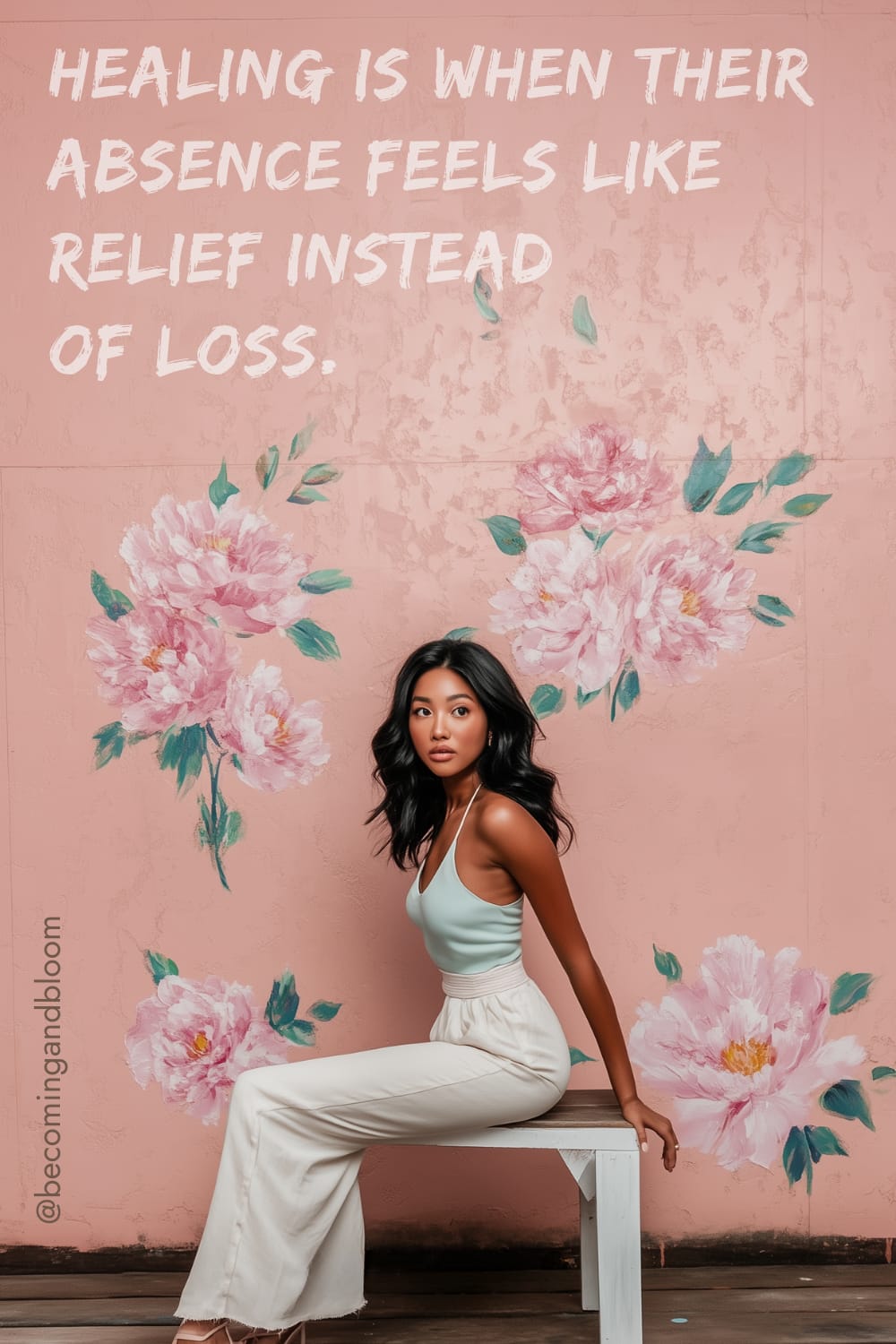
Remember that healing rarely follows a straight line. Celebrate quiet victories like moments of self-care or reaching out for support. Each intentional step brings you closer to reclaiming the authentic essence that’s always been inside you. Looking ahead, your future self is already grateful for every small step you’re taking today.
HEALING RESOURCES
You deserve support, and with the right resources, those small moments of peace will gradually become your new normal. Check out the links below to find the support that resonates with you.
National Domestic Violence Hotline
• 24/7 support: 1-800-799-SAFE (7233)
• Website: www.thehotline.org
RAINN (Rape, Abuse & Incest National Network)
• National Sexual Assault Hotline: 1-800-656-HOPE (4673)
• Online chat: www.rainn.org
• Support groups for those healing from codependent relationships
• Website: coda.org
Psychology Today Therapist Directory
• Find local therapists specializing in relationship issues and trauma
National Suicide Prevention Lifeline
• 24/7 support: 1-800-273-8255
• Website: suicidepreventionlifeline.org
• For young people experiencing relationship abuse
• Text “LOVEIS” to 22522
• Website: www.loveisrespect.org
The National Alliance on Mental Illness (NAMI)
• Helpline: 1-800-950-NAMI (6264)
• Website: www.nami.org
Source Links
- Healing from a Toxic Relationship
- How To Break Free from and Avoid Toxic Relationships for Better Mental Health
- How to Fix a Toxic Relationship | Charlie Health
- 6 Signs of a Toxic Relationship (and How to Leave One Safely) — Calm Blog
- Healing from Toxic Relationships: Kristin Money On How To Survive And Thrive After Psychological…
- Healing from Toxic Relationships: Dr. Brian Tierney On How To Survive And Thrive After…
- Healing After a Toxic Relationship
- Trauma Bonding: What It Is, Signs, and How to Stop
- How to Recover From Narcissistic Abuse
- Healing from Emotional Abuse: A Step-by-Step Guide to Recovery
- How to Heal from Abusive Relationships
- Reclaim Your Joy: How to Walk Away From Toxic Relationships
- Healing From Narcissistic Abuse: Recovery and Rebuilding Your Life – Dupagepsych.com
- Healing After Narcissistic Abuse: Steps to Recovery
- Healing From Emotional Abuse | Charlie Health
- Healing After a Toxic Relationship: The Path to Recovery – Manochikitsa Online Counseling & Therapy
- Healing from Emotional Abuse: 5 Steps to Fully Recover


