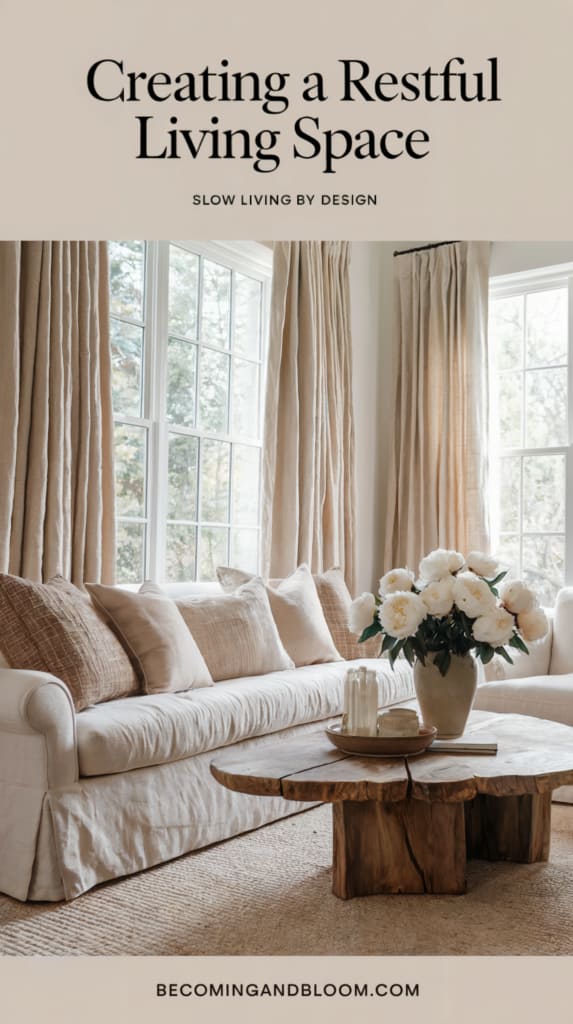
Creating a Restful Living Space: Slow Living by Design

Have you ever walked into a room and instantly felt your shoulders drop away from your ears? That moment when a space somehow whispers “you can breathe here” speaks to something deeper than just aesthetics. Creating a truly restful living space goes beyond following design trends or filling your cart with the latest organizational products…it’s about intentionally crafting an environment that nurtures your spirit and supports a slower, more meaningful way of living.
In This Article
- Understanding Slow Living in Your Space
- Decluttering with Intention and Grace
- Embracing Natural Elements and Rhythms
- Curating a Thoughtful Color Palette
- Creating Meaningful Focal Points
- Designing for Sensory Harmony
- Creating Space for Meaningful Rituals
- Embracing Imperfection and Evolution
- Small Steps Toward a Restful Home
In a world that constantly celebrates busy-ness and accumulation, designing a home that encourages rest becomes a quietly radical act. It’s about creating physical spaces that remind us to pause, that invite us to be fully present, and that reflect what truly matters in our lives.
Let’s explore how thoughtful design choices can transform your home into a haven that supports slow living principles and nurtures genuine rest for your body, mind, and spirit.
Understanding Slow Living in Your Space
Slow living isn’t about moving through life at a snail’s pace. Rather, it’s about being intentional with your time, energy, and attention. When we apply this philosophy to our homes, it transforms how we select, arrange, and interact with our physical environment.
The essence of slow living design is creating spaces that support presence rather than perpetual productivity.
A slow living space prioritizes quality over quantity, function alongside beauty, and meaning above trends. It creates room for the activities that truly nourish you rather than simply accommodating storage for more possessions.
The beauty of designing for slow living is that it looks different for everyone. Your restful space might include a cozy reading nook with your favorite books close at hand, while someone else might prioritize an uncluttered kitchen that makes cooking feel like a joy rather than a chore.
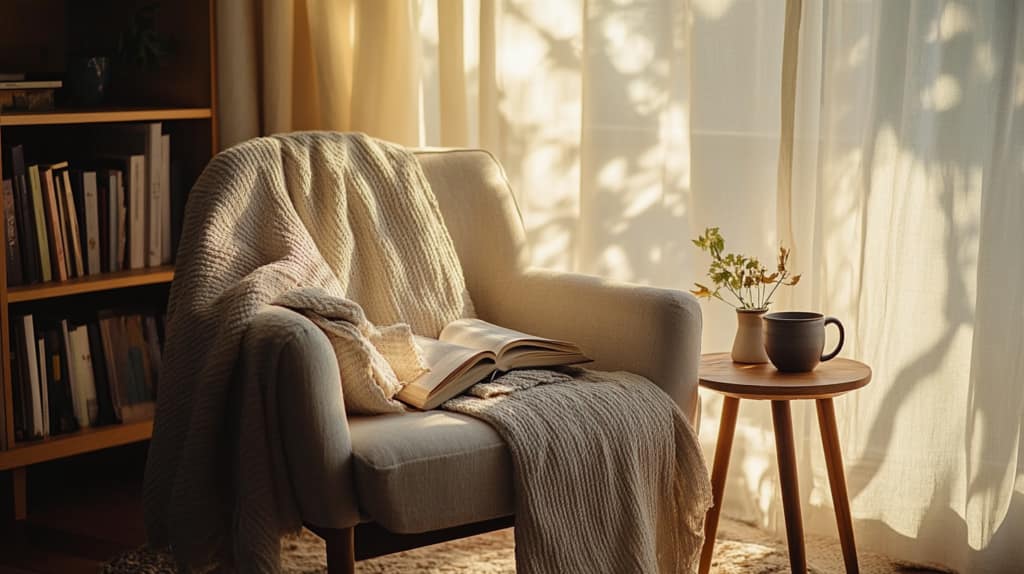
Before diving into specific design elements, take some time to reflect on what activities bring you genuine peace. Is it cooking, reading, creating, conversing with loved ones, or simply sitting in quiet contemplation? Understanding these personal preferences forms the foundation for creating spaces that truly support your version of slow living.
Decluttering with Intention and Grace
When creating a restful space, most of us instinctively know we need to address clutter. But approaching decluttering through a slow living lens means doing so with intention and self-compassion rather than rigid rules or impossible standards.
Key insight: Decluttering isn’t about emptiness…it’s about making space for what truly matters.
Consider asking yourself these questions as you assess your belongings:
- Does this item support the restful atmosphere I’m trying to create?
- Does it serve a practical purpose that enhances my daily life?
- Does it hold genuine meaning or beauty that nurtures my spirit?
- Does keeping this item require maintenance that drains rather than restores me?
This isn’t about achieving some perfectly minimal aesthetic that looks great on social media but feels cold in real life. Your home should feel like a genuine reflection of you at your most peaceful, not a showroom.
That beloved collection might stay if it truly brings you joy when you see it, but perhaps it’s displayed more thoughtfully. Those craft supplies remain if creating brings you peace, but they might find a more intentional storage solution.
Remember that decluttering isn’t something you do once and complete forever. It’s an ongoing conversation between you and your space, gradually aligning your environment with your evolving needs and values. Some seasons might call for more simplicity, while others might welcome a bit more fullness. Moving through this process with grace for yourself makes all the difference.
“Your home should be the antidote to stress, not the cause of it.”
Embracing Natural Elements and Rhythms
There’s something profoundly restorative about bringing elements of nature into our homes. Natural materials, textures, light, and even patterns have been shown to reduce stress and promote wellbeing on a physiological level.
Nature connection tip: Even in urban environments, incorporating natural elements can create a sense of subtle harmony that synthetic materials simply can’t replicate.
When designing a restful space, consider how you might:
Welcome Natural Light
Notice how sunlight moves through your home throughout the day. Could sheer curtains replace heavy drapes in some areas to allow more gentle light? Might rearranging furniture help you better access those golden afternoon rays that make your living room glow? Consider window treatments that can easily adjust to different light needs throughout the day.
Incorporate Natural Materials
Wood, stone, clay, linen, cotton, and wool all bring organic texture and warmth to spaces in ways that synthetic materials simply cannot. These elements connect us to the earth and add subtle, complex variations that our senses register as both interesting and soothing.
Even small additions matter. A wooden bowl on your coffee table, pottery vessels for kitchen utensils, or linen throw pillows can dramatically shift how a space feels without requiring major renovations or expense.
Align with Natural Rhythms
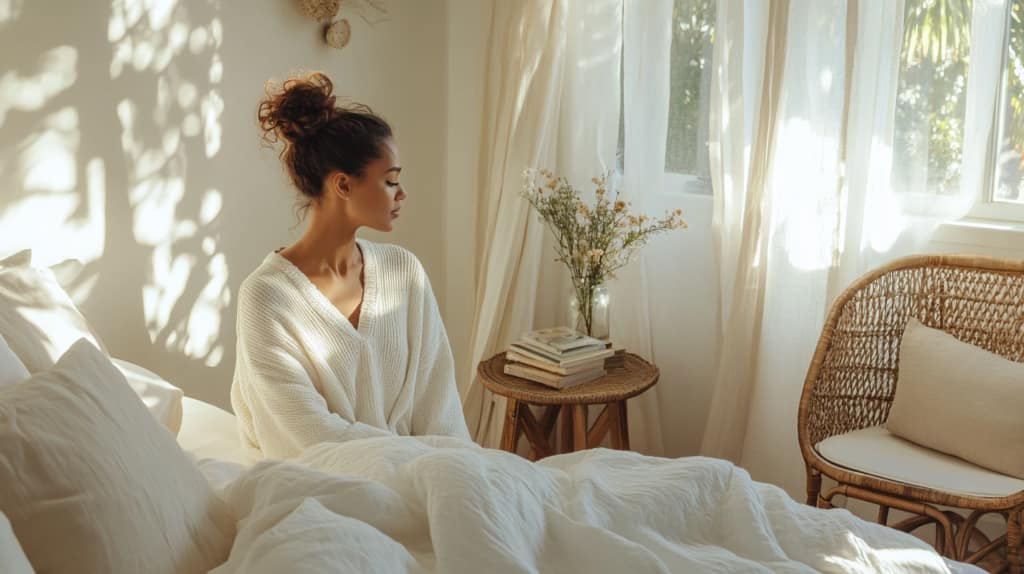
Consider how your home supports the natural rhythms of day and night, as well as seasonal changes. Softer, warmer lighting options for evening hours can signal to your body that it’s time to wind down. Seasonal adjustments…lighter bedding in summer, cozy layers in winter…help your home breathe with the natural world rather than fighting against it.
Curating a Thoughtful Color Palette
Color profoundly affects our psychological and emotional state, making it a powerful tool in creating restful environments. While personal preferences vary significantly, certain principles can guide your color decisions when designing for rest and slow living.
Color psychology insight: The colors surrounding us can either energize or calm our nervous system…choosing thoughtfully creates an environment that supports your desired state of being.
Consider Nature’s Neutral Foundation
Nature rarely presents single, flat colors. Instead, it offers complex neutrals with subtle variations…the many shades in a single piece of driftwood, the varied tones of sand on a beach, or the complex creams and browns of a bird’s feather.
These natural neutrals…soft whites, warm beiges, gentle grays, and muted earth tones…provide a foundation that feels both grounded and timeless. Using these as your primary palette allows a space to breathe while supporting visual rest.
Add Intention with Accent Colors
Thoughtfully chosen accent colors can enhance the feeling of rest while expressing your unique personality. Consider:
- Soft blues and greens that echo water and foliage, promoting feelings of calm
- Muted terracottas and gentle rusts that bring warmth without overwhelming energy
- Dusty lavenders and muted blue-grays that feel both sophisticated and soothing
The key is moderation. In a restful space, accent colors are best used as thoughtful touches rather than bold statements. A few carefully placed items in your accent color will have more impact than covering large surfaces.
Embrace Tonal Variation
Rather than strict coordination, consider working with variations of colors within the same family. These subtle shifts create visual interest while maintaining harmony, much like a beautiful landscape contains many variations of similar hues.
Remember that lighting dramatically affects how colors appear, so test samples in your actual space at different times of day before committing to larger applications.
Creating Meaningful Focal Points
A restful space isn’t a space stripped of personality or visual interest. Rather, it’s one where attention is directed with intention toward elements that matter most.
Design principle: Meaningful focal points give your eye somewhere to rest, creating visual anchors that bring both beauty and purpose to your spaces.
Quality Over Quantity
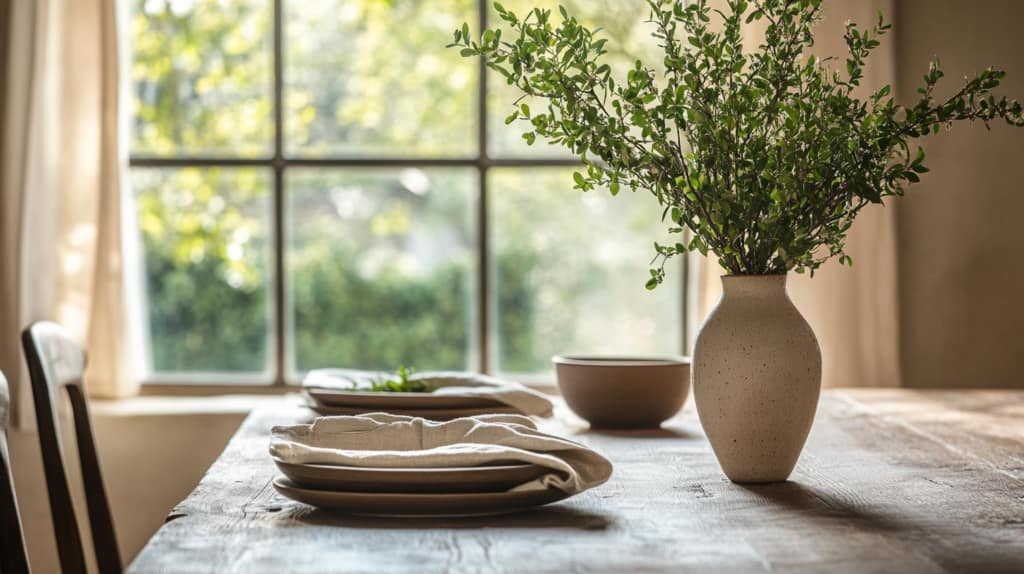
Instead of many small decorative items that can create visual noise, consider fewer, more significant pieces that truly speak to you. A single beautiful artwork that brings you joy whenever you see it. A carefully selected vase filled with seasonal branches. These focal points give the eye somewhere meaningful to rest.
Thoughtful Groupings
When displaying collections or multiple items, grouping them thoughtfully creates cohesion rather than clutter. Consider unifying elements like color, material, or theme, and allow for breathing space around the grouping.
Personal Touchstones
The most meaningful focal points often connect to our values, memories, or aspirations. A wall of family photos arranged with intention. A display of items collected during significant travels. Books that have shaped your thinking, arranged where you’ll actually see and use them.
These elements do more than decorate…they ground us in what matters and remind us of our deeper purpose beyond the rush of daily tasks.
“The details aren’t just details. They make the design.”
Designing for Sensory Harmony
A truly restful environment engages all our senses in balanced ways. While visual elements often receive most of our attention in design discussions, considering how a space sounds, feels, and even smells creates a more holistically restorative experience.
Multi-sensory approach: We experience our homes with our entire beings…not just our eyes. Creating sensory harmony means addressing what we hear, touch, and smell as intentionally as what we see.
Acoustic Comfort
Notice the sound quality in your spaces. Hard surfaces can create echo and amplify noise, while soft elements like rugs, cushions, and textiles absorb sound and create acoustic comfort. Strategic placement of these elements can significantly change how restful a room feels.
Consider also what sounds you might intentionally add. The gentle bubble of a small fountain, wind chimes by an open window, or simply ensuring your space allows you to enjoy music that soothes your spirit.
Tactile Pleasure
The textures we interact with affect both our physical comfort and psychological ease. Consider the materials you touch most often…upholstery fabrics, bedding, towels, even cabinet hardware.
Investing in natural fibers for textiles not only feels better to the touch but often improves with age rather than deteriorating like many synthetics. The cool smoothness of stone, the warmth of well-oiled wood, the softness of worn linen…these tactile experiences connect us to our environments in meaningful ways.
Thoughtful Scents
Our sense of smell connects directly to the emotional centers of our brain, making it powerful for creating restful atmospheres. Rather than covering unpleasant odors with artificial fragrances, consider addressing sources directly and then adding natural scents intentionally.
Fresh air from open windows, the subtle scent of beeswax candles, essential oil diffusers with calming scents like lavender or frankincense, or even the practical beauty of fresh herbs growing in kitchen windows all contribute to a space that smells alive and nurturing.
Creating Space for Meaningful Rituals
Perhaps the most important aspect of designing for slow living is creating space for the rituals that bring meaning and rest to your days. These don’t need to be elaborate or time-consuming…often the simplest practices become the most significant over time.
Ritual wisdom: Physical spaces shape our behaviors more than we realize. Designing with your meaningful rituals in mind makes it easier to engage in practices that nurture your spirit regularly.
Consider how your home supports (or hinders) rituals like:
- A mindful morning cup of tea or coffee without digital distractions
- Regular family meals at a table cleared of clutter and work
- Evening wind-down routines that signal to your body it’s time to rest
- Weekend moments of reflection, gratitude practice, or planning
- Creative practices that nourish your spirit
Designing spaces that support these rituals might mean:
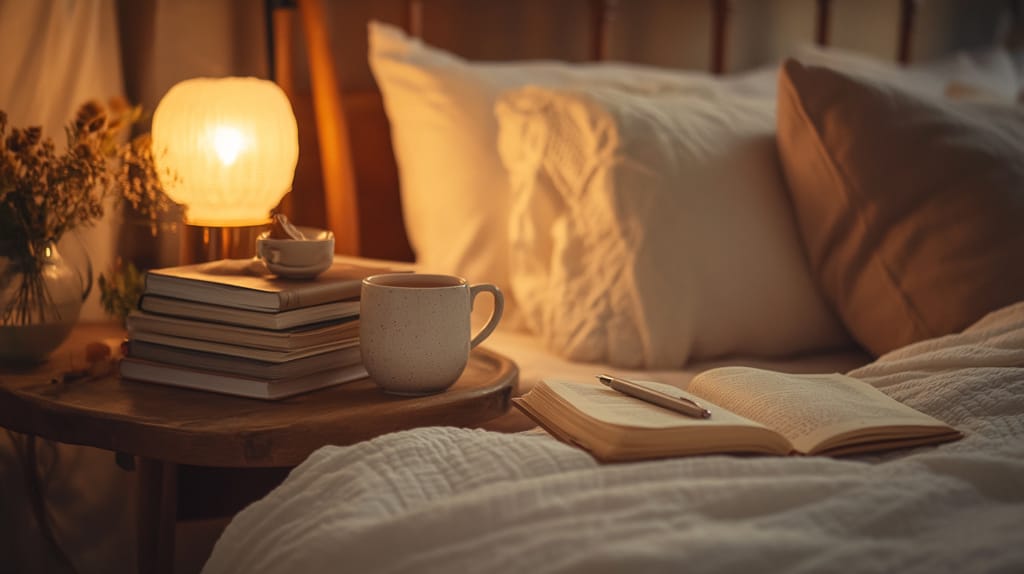
- A comfortable chair positioned to catch morning light, with a small table for your mug
- A dining table that can be easily cleared of daily projects
- A bedside table free of work materials and equipped with just what supports rest
- A writing desk with a beautiful journal and pen always at the ready
- Art supplies stored where you’ll actually use them, not hidden away and forgotten
When we design our spaces around what truly matters to us, they begin to work with us rather than against us in living aligned with our values.
Embracing Imperfection and Evolution
Perhaps the most essential element in creating a truly restful living space is giving yourself permission for it to be beautifully imperfect and constantly evolving. A home designed for slow living isn’t frozen in perfect order…it moves and breathes with the people who live there.
Wabi-sabi wisdom: Finding beauty in imperfection frees us from the exhausting pursuit of flawlessness and allows our spaces to tell the authentic story of our lives.
Water rings on wooden tables tell stories of gatherings. Throw blankets casually draped rather than precisely folded invite actual use. Books stacked beside favorite chairs show a home where learning happens. These aren’t flaws to be corrected but evidence of a life being lived with intention.
Your spaces will, and should, evolve as you do. What feels restful in one season of life might shift in another. The rhythms of your home will change with the seasons, with family dynamics, with your own inner growth. Embracing this natural evolution prevents the pursuit of a “perfect” space from becoming yet another source of striving and stress.
“There is beauty in the lived-in and the loved.”
Small Steps Toward a Restful Home
Transforming your home doesn’t require dramatic renovations or complete restarts. Even small, intentional changes can significantly shift how your space feels.
Begin with these simple actions:
- Clearing one surface that you see daily of unnecessary items
- Adding a single plant or fresh flowers to a room you spend significant time in
- Creating one comfortable spot dedicated solely to rest or a calming activity
- Removing digital devices from one area of your home
- Introducing a natural material or texture you find particularly soothing
Notice how these small changes affect not just how your space looks, but how you feel within it. Let this awareness guide your next steps, gradually aligning your environment with your vision for a slower, more intentional life.
Remember that creating a restful home isn’t a finish line to cross but a practice to return to again and again. Each thoughtful choice builds upon the last, gradually transforming not just our spaces but our relationship with them.
In a culture that often equates worth with productivity and beauty with perfection, choosing to design a home that prioritizes rest becomes a powerful statement about what you truly value. It’s an ongoing invitation…to yourself and others…to slow down, to notice, to be present for the moments that matter most.
What small step could you take today toward creating a space that helps you breathe a little easier?