Identity-Based Beauty: Thinking Like Your Best Self
Identity-Based Beauty: Thinking Like Your Best Self
You know that feeling when you see someone who seems to effortlessly glow from within? Their skin radiates, their confidence is magnetic, and you can tell their beauty routine isn’t just something they do…it’s part of who they are. What if I told you that this radiance isn’t about having the perfect products or techniques, but rather about aligning your beauty practices with your authentic identity?
Identity-based beauty transforms your relationship with self-care by shifting your focus from what you do to who you are becoming. Research shows that when we adopt behaviors aligned with our self-concept, we’re significantly more likely to maintain them long-term. According to recent consumer studies, beauty buyers increasingly prioritize mindset and values over traditional demographics, showing that identity alignment is central to effective beauty routines.
In this article, we’ll explore how thinking like your best self can revolutionize your beauty habits, create sustainable self-care practices, and help you cultivate genuine confidence that radiates from within.
In This Article
Understanding Identity-Based Beauty
Have you ever wondered why some beauty habits stick effortlessly while others feel like a constant struggle? The difference often lies not in the habits themselves, but in how they connect to your identity.
Identity-based beauty is founded on a simple yet powerful principle: lasting change happens when your habits align with who you believe yourself to be. Instead of focusing solely on what you do (“I need to drink more water”), you shift attention to who you are (“I am someone who prioritizes hydration because I care deeply about my skin’s health”).
The Science Behind Identity and Habits
Psychological research shows that identity-based motivation significantly improves habit formation and personal growth. Dr. Wendy Wood, a leading psychologist specializing in habit formation, explains that when behaviors feel congruent with our self-concept, we’re much more likely to maintain them consistently.
This isn’t just theoretical…identity alignment has tangible effects on our beauty practices. McKinsey’s 2024 Beauty Consumer Report reveals that 45% of Gen Z and Millennial beauty shoppers regularly switch brands based not on loyalty but on alignment with their personal values and lifestyle, demonstrating how closely beauty choices are tied to identity.
Beyond Surface-Level Beauty
Identity-based beauty transcends the superficial focus on appearance. It’s about honoring who you are at your core and expressing that authenticity through your self-care practices.
This approach acknowledges that beauty is deeply personal and intersectional. Your beauty identity may be influenced by your cultural background, gender expression, age, and numerous other factors that make your experience unique. Research from Groundwork Therapy Brooklyn emphasizes that authentic beauty practices must honor these intersectional factors, particularly for individuals who may face additional challenges with body image and societal beauty norms.
True beauty emerges when your daily rituals reflect who you are at your core, creating a confident and authentic glow that no trend can replicate.
Defining Your “Glowed-Up” Identity
Before you can align your beauty practices with your identity, you need clarity on who your “best self” actually is. This isn’t about creating an idealized, unattainable version of yourself, but rather identifying the authentic core of who you are when you feel most confident, radiant, and aligned.
Discovering Your Beauty Values
Your beauty values are the principles that guide your relationship with self-care. These might include:
- Authenticity: Embracing your natural features rather than trying to conform to trend-based ideals
- Sustainability: Choosing products and practices that align with environmental consciousness
- Simplicity: Favoring minimalist routines that bring calm rather than complexity
- Holistic wellness: Seeing beauty as connected to overall physical and mental health
- Cultural expression: Honoring beauty traditions that connect you to your heritage
Take a moment to reflect on which of these values (or others) resonate most deeply with you. Research published in Nature Communications suggests that when beauty practices align with our cultural values and identity, they contribute significantly to psychological wellbeing and authentic self-expression.

Visualization Exercise: Meeting Your Radiant Self
Try this powerful visualization exercise to connect with your “glowed-up” identity:
- Find a quiet space where you won’t be interrupted
- Close your eyes and take several deep breaths
- Imagine meeting yourself at your most radiant…not just physically, but in your entire presence
- Notice how this version of you carries herself, how she speaks, what she prioritizes
- Pay attention to how she approaches beauty and self-care…not just what she does, but the intention behind it
- Ask her what matters most to her about beauty and self-care
After this visualization, journal about what you discovered. What qualities did you notice? What values seemed to guide this version of yourself?
The Identity Statement
Based on your reflections, craft an identity statement that captures the essence of your beauty identity. This isn’t about appearance, but about who you are in relation to your self-care. For example:
“I am someone who nurtures my natural radiance through mindful rituals that honor my body’s wisdom and celebrate my unique features.”
Or:
“I am a person who approaches beauty with playful creativity, using self-expression as a form of joy and authentic connection with myself.”
This statement becomes your north star when making beauty choices and establishing habits. The Mayo Clinic endorses such identity reframing as an effective cognitive-behavioral therapy technique for improving self-esteem and wellbeing, particularly in appearance-focused contexts.
Aligning Beauty Practices with Your Authentic Self
Once you’ve clarified your beauty identity, the next step is bringing your daily practices into alignment with this vision. This isn’t about overhauling your entire routine overnight, but rather about gradually making choices that feel coherent with your authentic self.
Auditing Your Current Beauty Routine
Take an honest inventory of your existing beauty practices, products, and habits:
- Which elements of your routine feel genuinely aligned with your identity statement?
- Which aspects feel disconnected or inauthentic to who you are?
- Are there practices you maintain out of habit or perceived obligation rather than true alignment?
- What would you include if you were building a routine from scratch based solely on your beauty values?
This audit often reveals surprising insights about where misalignment occurs. Perhaps you’re spending time on elaborate makeup techniques when your true value is simplicity, or maybe you’re neglecting practices that would genuinely nurture your definition of beauty.
Bridging the Identity-Behavior Gap
When there’s a disconnect between your beauty identity and your actual practices, you have two options: adjust your practices or refine your identity concept. Both are valid approaches.
Identity adjustment comes when you realize that your stated values may not accurately reflect your true priorities. For instance, you might value “natural beauty” in theory but genuinely enjoy creative expression through makeup. Honoring this reality by refining your identity statement creates more authentic alignment.
Behavior adjustment happens when you recognize that certain habits don’t serve your true self. This might mean:
- Simplifying overcomplicated routines
- Adding practices that honor neglected values
- Replacing products that don’t align with your principles
- Shifting the intention behind existing practices
Small Shifts, Big Impact
Interestingly, the most powerful changes often come through subtle shifts in how you approach existing practices rather than dramatic routine overhauls.
Beauty alignment tip: The same moisturizing ritual can feel entirely different when approached from a place of “checking the box” versus “nurturing my skin as an act of self-respect.” This shift in mindset transforms the experience and strengthens your identity connection.
Consider these small but powerful adjustments:
- Adding a moment of intention setting before your morning skincare
- Expressing gratitude for specific features as you care for them
- Choosing one product to research and replace with an option better aligned to your values
- Creating a simple ritual around a routine practice (like lighting a candle before evening skincare)
Creating Sustainable Beauty Habits Through Identity
The true power of identity-based beauty lies in its ability to create sustainable, consistent habits without relying on willpower or strict discipline. When beauty practices feel like natural expressions of who you are, consistency follows effortlessly.
The Identity-Habit Connection
Research by habit formation experts shows that identity provides the most durable foundation for lasting habits. As Dr. Wendy Wood explains in her book “Good Habits, Bad Habits,” identity-based motivation makes behaviors feel necessary and natural rather than optional or forced.
When you think of yourself as “someone who prioritizes sun protection because I value my skin’s long-term health,” applying sunscreen becomes as automatic as brushing your teeth. It’s no longer a question of “should I?” but simply an expression of who you are.
Environment Design for Identity Alignment
Your physical environment plays a crucial role in supporting (or undermining) your beauty identity. Creating spaces that reflect and reinforce your authentic self makes consistent habits much easier to maintain.
Consider these environment design principles:
Visual Alignment
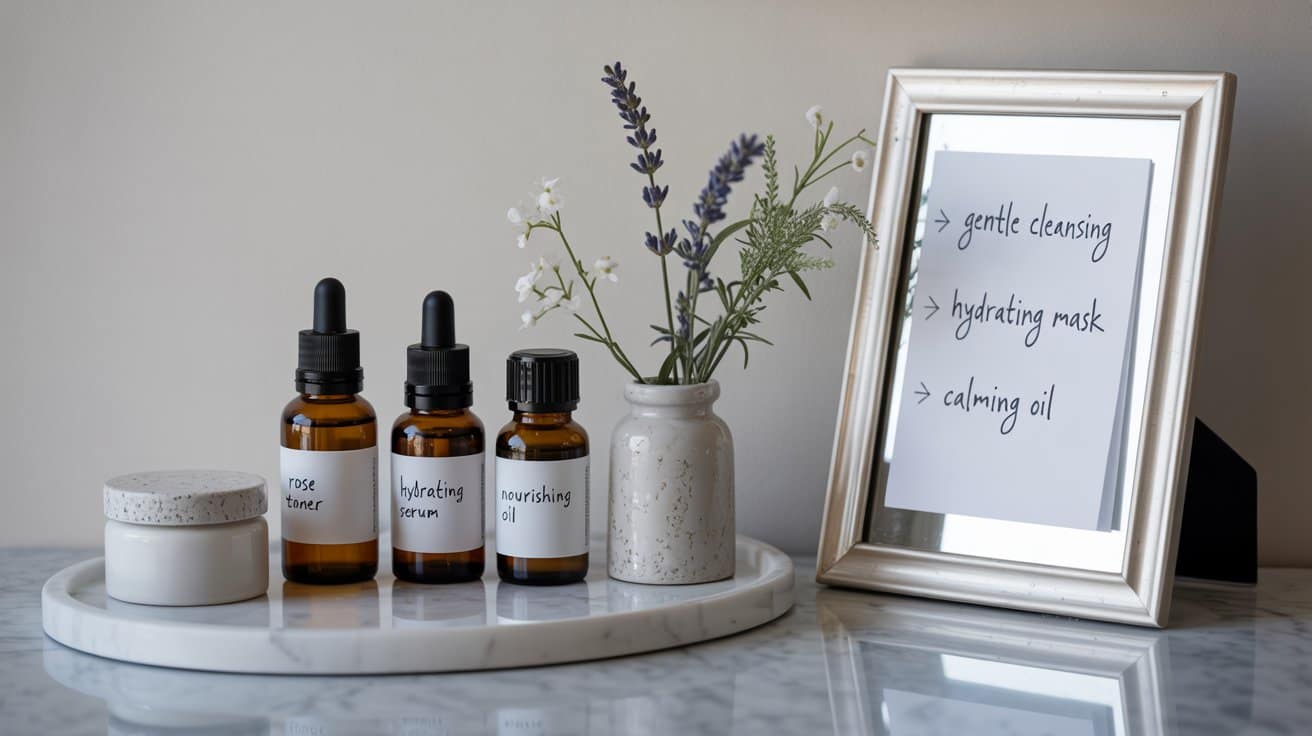
Does your beauty space visually reflect your identity and values? If simplicity matters to you, a cluttered vanity with dozens of products creates immediate dissonance. If self-care is sacred to you, perhaps your products deserve to be displayed beautifully rather than hidden away.
Friction Reduction
Make identity-aligned behaviors the path of least resistance by:
- Placing priority products front and center
- Creating simple systems that make your valued routines easy to complete
- Removing or hiding products that don’t align with your beauty identity
- Setting up visual cues that remind you of your core values
Tracking Identity Expression, Not Just Results
Most beauty tracking focuses exclusively on outcomes: Did my skin clear up? Did my hair become shinier? While results matter, identity-based beauty suggests tracking something different: how consistently your behaviors express your authentic self.
Try this simple reflection practice at the end of each week:
- In what ways did my beauty practices this week reflect my true identity?
- Were there moments when my choices felt misaligned with who I am?
- What one adjustment would bring my practices into closer alignment with my authentic self?
This approach shifts focus from external results to internal coherence, which paradoxically often leads to better external results as well.
Embracing Your Evolving Beauty Identity
One of the most beautiful aspects of identity-based beauty is that it acknowledges growth and evolution. Your beauty identity isn’t static…it develops as you learn, age, and experience life’s transitions.
Seasons of Beauty
Just as nature moves through seasons, your beauty identity has natural cycles and transitions. These might include:
- Life stage transitions (adolescence, pregnancy, menopause)
- Health changes that shift your relationship with your body
- Evolving values as you gain new knowledge and perspectives
- Seasonal variations in what your skin and body need
Research indicates that cultural participation in identity-affirming practices mediates psychological wellbeing, reinforcing a positive self-concept through these transitions. Beauty rituals can serve as anchors during change, providing continuity while allowing for adaptation.
Graceful Evolution vs. Identity Crisis
The key distinction between graceful evolution and identity crisis lies in conscious awareness. When your beauty identity evolves mindfully, there’s a sense of continuity even amid change. You recognize the core values that remain while allowing new expressions to emerge.
Practical ways to support this graceful evolution include:
- Seasonal beauty reflections where you consciously reassess your needs and values
- “Beauty biography” journaling to track your evolving relationship with self-care
- Intentional experimentation with new practices within your value framework
- Community connection with others in similar life stages
The Paradox of Identity: Consistency and Growth
At first glance, identity might seem to conflict with growth…if you’re committed to being a certain type of person, how can you also evolve? The resolution lies in distinguishing between your core values (which may remain relatively stable) and their expression (which naturally evolves).
For example, your commitment to natural ingredients might remain constant while your understanding of what “natural” means becomes more nuanced over time. Your value of self-acceptance stays central even as the parts of yourself you’re learning to accept change with age.
Culturally meaningful participation in identity-affirming practices mediates psychological wellbeing, reinforcing a positive self-concept and authentic expression.
Creating Your Authentic Beauty Path
Identity-based beauty offers a transformative approach to self-care that goes far beyond products and techniques. By aligning your beauty practices with your authentic self-concept, you create a foundation for consistency, confidence, and true radiance.
This isn’t about perfection or following someone else’s beauty standards. It’s about discovering who you are at your core and honoring that truth through mindful self-care. As consumer research shows, the modern approach to beauty prioritizes this personal alignment over trends or external expectations.
Remember that this journey unfolds gradually. Start with clarifying your beauty identity through the exercises we’ve explored. Then begin making small shifts to align your daily practices with this vision. Pay attention to how it feels when your actions and identity come into harmony…that feeling of coherence is your compass.
What one aspect of your beauty routine could you approach differently tomorrow to better reflect your authentic self? Perhaps it’s as simple as bringing more mindful presence to your existing practices, or maybe it’s reconsidering a product that doesn’t truly align with your values. Whatever small step you choose, it’s the beginning of a beautiful evolution.
Sources
- Color Psychology in Marketing and Branding is All About Context – Help Scout
- Top Beauty Trends from the Business of Fashion Report 2025 – Evolut Agency
- Cultural participation and psychological wellbeing: the mediating … – Nature Communications
- Good Habits, Bad Habits: The Science of Making Positive Changes That Stick – Dr. Wendy Wood
- Therapist Finder – American Psychological Association
- Body Image – Mayo Clinic